

The Scientist With a Camera
A chat with glaciologist Dr. Peter Neff (icy_pete) about ice cores, reaching millions on TikTok, and the future of US science.

👋 Hello to 3,444 climate buddies 🌳
Delphi Zero explores the interplay of climate, energy, and security 🌳🔋🛡️
📧 If you are opening this essay in your email inbox, I recommend clicking on the title of this piece to enjoy the full-length version in the browser.
Whaddup?!
Over the past weeks, we dove head-first into a 10-part series about the wonders of acoustic research in Antarctica.
Today, we’ll take a quick breather and listen to what one of the biggest spokes people for Antarctica has to say. Dr. Peter Neff - Icy Pete - has championed the importance of polar research for years and has built a massive online following.
His content is really cool.
I hope you’ll enjoy this interview as much as I did.
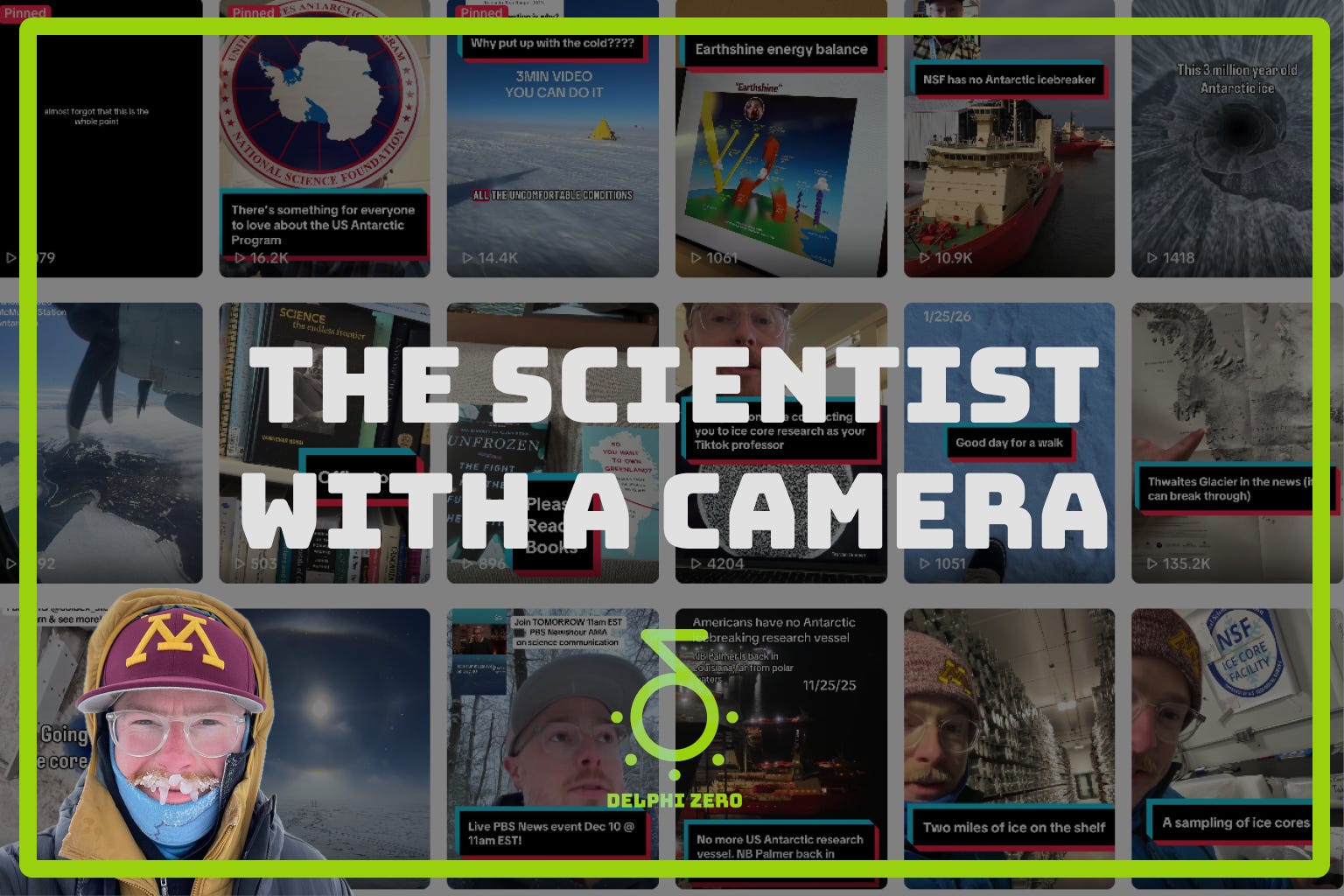
The Scientist With a Camera
In your email signature, you have a quote by Vannevar Bush. What’s the quote and why did you decide to use it?
The Vannevar Bush quote is:
“For better or worse we are destined to live in a world devoted to modern science & engineering. If the road we are on is slippery, we cannot avoid a catastrophe by putting on the brakes, closing our eyes or taking our hands off the wheel. What is the sane attitude of a scientist or layman? Absence of wishful thinking.”
I added this maybe 6-9 months ago or more.
Leading into 2025, I was thinking a lot about the fundamental nature of our democracy and how that is an essential ingredient and foundation upon which so much that we enjoy in the United States is built upon. If we’re not maintaining the health of our democracy, what we’ve built on top of it will also start to crumble. There are a lot of pieces to maintenance of democracy, but clear, truthful communication is one as is trustworthy, unbiased, independent scientific information to underpin decision making.
I was also thinking about how we’ve always, in the United States, placed an incredible amount of power in the presidency. This has in my field of work led to giant leaps for federal investment in university science, at the behest of influential folks like Vannevar Bush who helped coordinate the Manhattan Project during World War Two and connected US university scientific power with that of the US military apparatus--both of which are part of our national security apparatus (science should NOT be considered separate from this).

I also think of folks, for my Antarctic research focus, like Admiral Richard Byrd, America’s first polar exploration hero and someone who similarly had the ear of Franklin D Roosevelt at key junctures. I’m thinking of the first US government expeditions to Antarctica in the 1940s which built up over that decade and the next into the world-leading US military-civilian apparatus we have in Antarctica and which led to the establishment of the Antarctic Treaty in 1959, preserving that last-discovered continent for science & peace (something that we must remain resolved to preserve). The United States has continued to lead in Antarctica under the auspices of the military-civilian Operation Deep Freeze (ongoing for 70 years now) and the United States Antarctic Program. I’ve been incredibly privileged to be involved with our US Antarctic science operations most of my career so far...
Besides the quote simply describing that we can’t lose our focus on the road ahead (no matter your area of expertise... I think the quote applies to the challenge of climate change as well), it really fits the forward-thinking of Dr. Bush, who’s leadership and advocacy in the 1940s led to congress establishing the National Science Foundation in 1950. The ensuing 75 years of federal investment in US universities and other research has contributed greatly to all of our national security and prosperity, but this investment is increasingly under-appreciated.
We’ve invested in ourselves greatly in those 75 years, and NSF funding not only supports scientists and scientific research but its funds flow to the communities and folks of all working backgrounds who support all parts of our civil society which we need to be able to do great things!
What do you do for a living? What were the major turning points that led you there?
I’m an assistant professor at the University of Minnesota.
Relatively recently, I became a 50% research 50% teaching faculty, so I’m learning again how to be a good teacher while trying to balance my portfolio of federally-funded research projects.
My research specialty is ice core science and in the last 3-4 years I’ve contributed by collecting new ice cores. Collecting cores is quite the logistical effort, so we’re not always actually able to get new samples and folks spend lots of time working on what we’ve already collected.
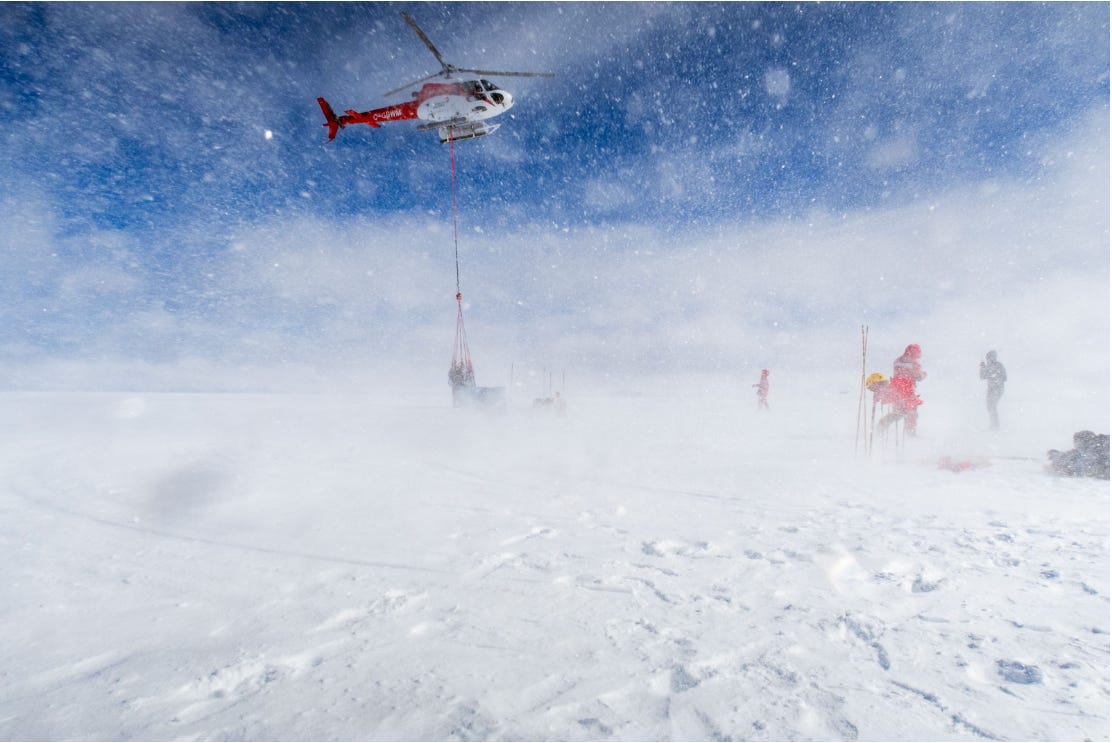
In summer 2023, I led an international team to collect a 219 meter deep ice core from a site called Combatant Col, beneath the towering Mount Waddington in the southern Coast Mountains of BC, Canada.
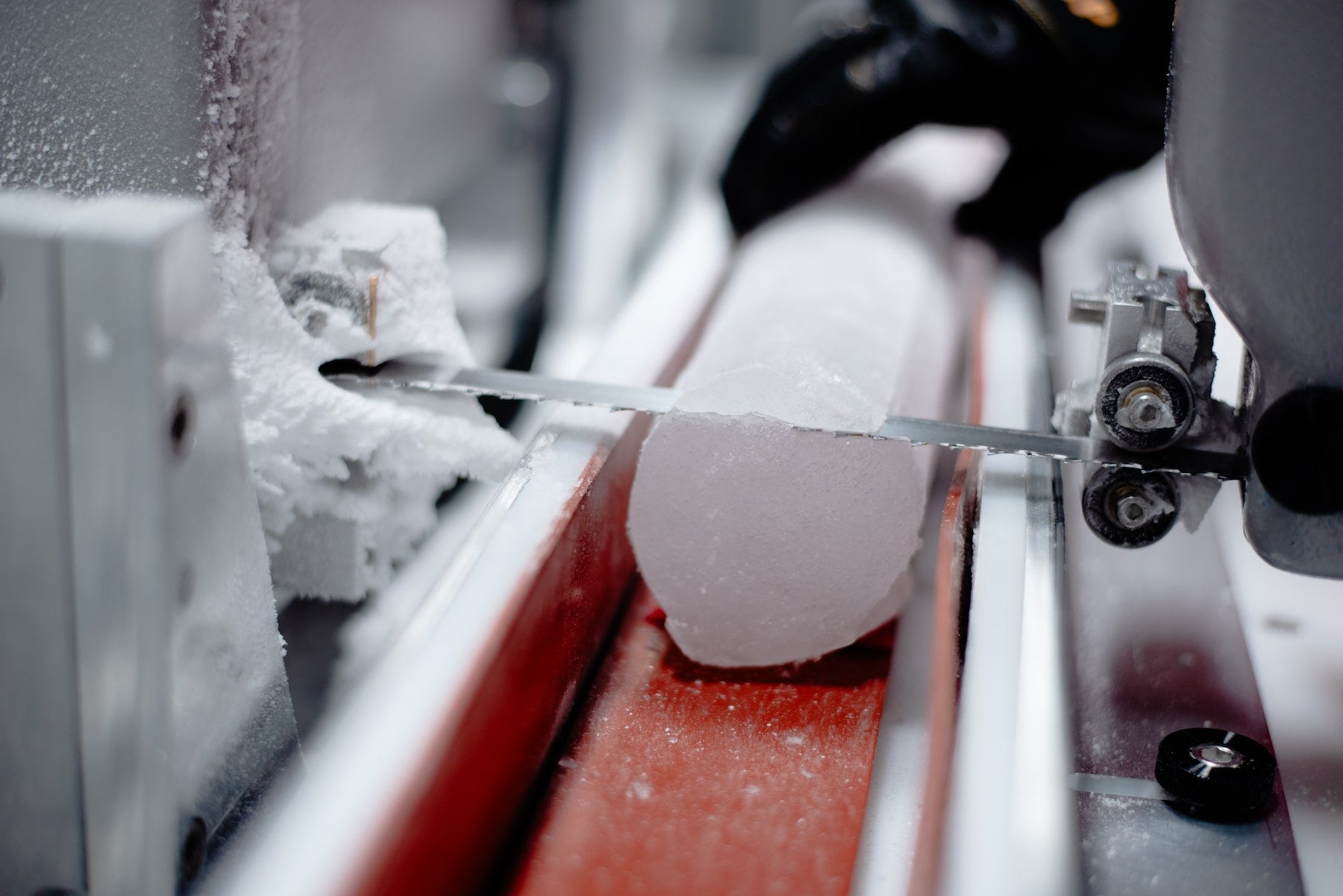
In Antarctica, in addition to helping with a big community project called NSF COLDEX which has now collected the oldest ice cores ever (dated to 6,000,000 years old). I co-led another international team in partnership with South Korea to collect important new 150 meter deep ice cores near the most concerning glacier in the world: Thwaites Glacier which is rapidly shedding mass as it is melted from below by ocean currents.
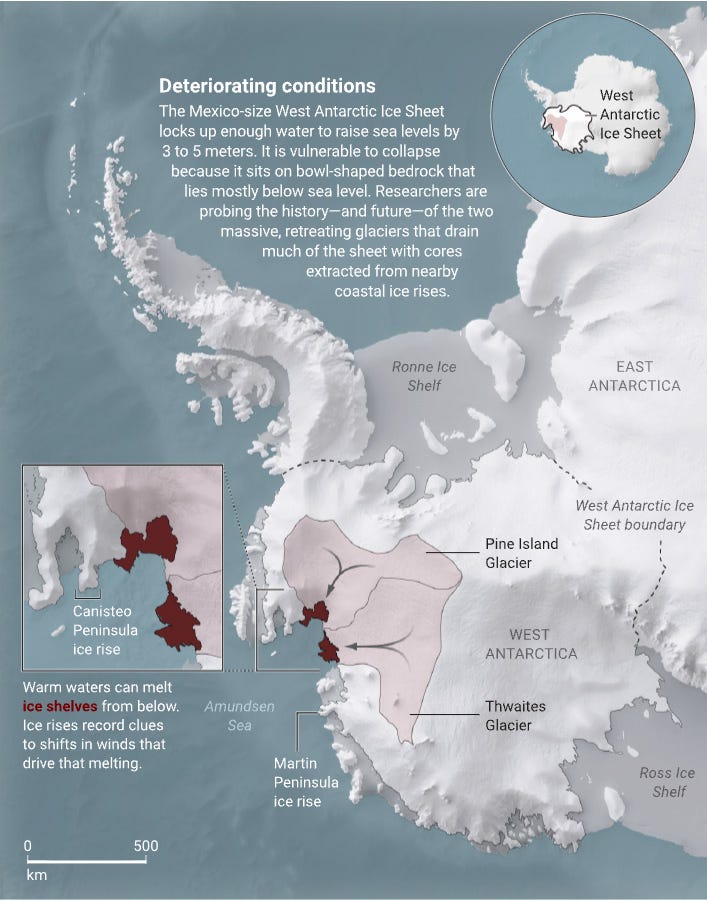
It will be a contributor to sea level rise for the foreseeable future, but we need better climate and other observations to determine how much sea level it may contribute, and how soon.
As for turning points, here’s a list:
Supportive family that applied no pressure for what my educational and career course would be, but provided clear support even if the budget was tight when my siblings and I were in undergrad.
Key talented and supportive K-12 public school teachers, and participating in a well-supported Science Olympiad program. Our Prairie High School chemistry teacher Mr. Lemberg introduced me to science which he did with humor, kindness, and a magician’s flair. My English teacher Mr. Christian at the same time added really crucial perspective from literature and culture with respect to civics, privilege, public service, and the value of democracy.
The ability and fortune to attend my affordable in-state world leading university: University of Washington. Which just so happens to be a hub of polar research (as is the broader Seattle area, with its port and shipbuilding industry that not only built our heavy icebreakers but remains homeport for all of our US Coast Guard polar icebreaking fleet)
Undergraduate research positions with National Science Foundation funding. The 75+ year long US federal-university research partnership brought me into ice core research as a sophomore undergrad and I just kept pursuing it from there on.
Discovering mountaineering for the self confidence and sense of ability it provided in partnership with a moderate level of physical fitness and technical knowhow. Growing up and becoming an adult in Washington state really had an influence on me, and I learned a lot about my abilities and limits exploring the Cascade mountains and being fascinated by their geology and glaciers.
Supportive mentors who didn’t put any of their ego in the way of my own way finding for what drove me or obsessed me enough to quixotically pursue my research.
Why ice? What type of information do researchers usually look for? What can ice tell us and where are its limitations?
Ice is amazing for a host of reasons, but it’s basically the youngest and most actively-accumulating geologic archive from which we can extract chemical information that either lets us estimate (through chemical “proxy” relationships) or directly measure past environmental conditions.
The most direct part of this is the air bubbles that get trapped in glacier ice, which started as the air between the fingers of the millions and billions of snowflakes that make up glaciers and ice sheets. From that air, if we extract it under vacuum, is an incredibly direct archive of past air. Ice is also just a really clean “sampling device” for environmental chemistry, compared to (no offense to my sediment core colleagues) say lakebed or marine sediment cores.
That allows us to isolate almost any aspect of chemicals that are in the natural environment in ice, if we have instruments sensitive to detect the concentrations which can be extraordinarily small, say in Antarctica: parts per billion, parts per trillion or even parts per quadrillion....
Ice in Antarctica is clean enough to tell us what past carbon dioxide was in the atmosphere. The strongest control knob on Earth’s temperature is carbon dioxide, and we’re adding it to the atmosphere fast. All other glacier ice on Earth is too dirty - too much carbon-rich mineral dust - to cleanly preserve this particular gas without some alteration. Keep in mind the Northern Hemisphere, where our Greenland deep ice cores come from, has much more land surface area than the Southern Hemisphere and so is some tens of times more dusty than the Southern Hemisphere and by extension Antarctic ice.
Ice is limited though, in the time that it covers and of course is also biased towards regions where ice is well preserved - very cold, basically sub-freezing all year round. So we’re strongly biased toward the poles with a few mountain regions scattered worldwide although mountain glacier ice cores are more difficult to interpret. Greenland ice only dates back to 120,000 or 130,000 years or so (a key time period called the “Eemian” which is the last warm interglacial period, which was slightly warmer than today and is considered an analog for the near future).
Antarctic ice extends 800,000 years back continuously in time with the current oldest ice core (EPICA Dome C) which is soon to be extended to 1,200,000 years. I’m part of a big US team called NSF COLDEX that is working to understand some stranded pockets of “blue ice” (ice without snow on top of it, bare ice, looks blue) which have been dated to more than 6,000,000 years old but are again less complete and more difficult to interpret.
Finally, an advantage for what I work on is that we have ideal ice core sites right next to the most concerning glacier on Earth: Thwaites Glacier. This spot in West Antarctica, where that ice sheet flows into the Pacific Ocean, is changing fast and has been for the last few decades, but it’s very far from any permanent research station and thus long-term observations.

I went there in 2024 with an international team that recovered the first 100 year-long (drilling 150 meters deep at this very snowy location) just 130 kilometers from this hugely important glacier that may be sending 10s to 100s of centimeters of sea level rise across the globe in coming decades to centuries. We want to know what environmental variability that glacier has experienced, and ice cores are the only way to reconstruct that (no trees in Antarctica to core, and sediment cores aren’t as highly detailed as our ice cores are).
What are the biggest unknowns in your area of research? Do you have any hypotheses to those unknowns? What would be the one question that you’d like to have answered? Why this particular question?
Well, a big unknown is how much and how fast will we see continued ice mass loss and sea level rise coming out of Antarctica -- largely from possibly unstable retreat of Thwaites Glacier.
Gaining clarity here is a huge multi-disciplinary question relating to our fundamental ability to understand and model the behavior of a Florida-sized glacier that is being forced simultaneously by the atmosphere and ocean. And this is happening at one of the most remote, poorly observed locations in Antarctica or on Earth for that matter.
So, I'm hoping my new ice cores from what we're calling the RAICA initiative -- the Ross-Amundsen Ice Core Array -- provide the first year-to-year records of how weather and climate have been affecting a glacier like Thwaites. There's a high-end sea level rise scenario on any IPCC projections for 2100 or even 2300, a big upper dashed line that is our uncertainty about what this part of Antarctica will do.
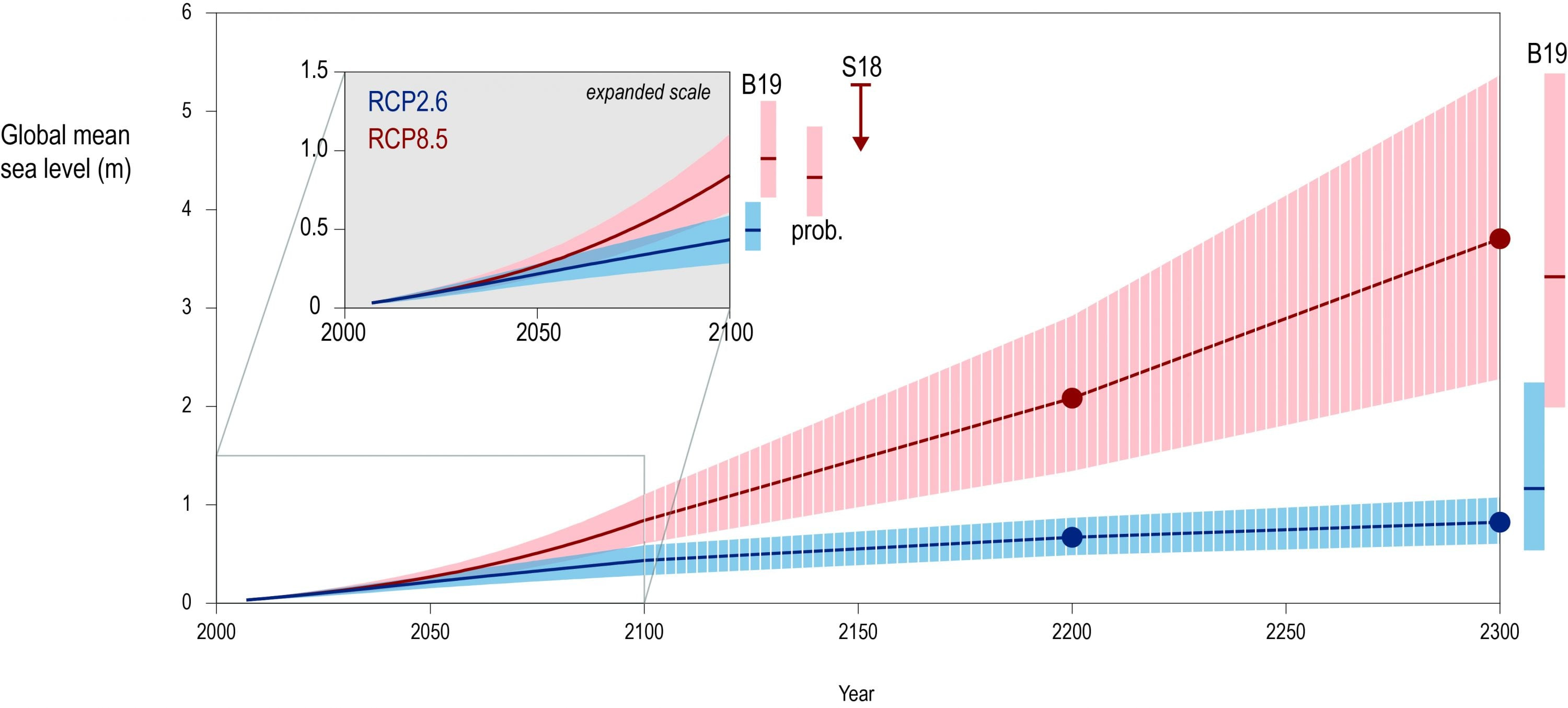
I'm trying to make my small contribution to either eliminate that high-end scenario or better quantify it.
You have quite a popular TikTok channel. Were you surprised that it works well? Why/why not? What would be one quick win and one meta-principle you would like to share with every science communicator?
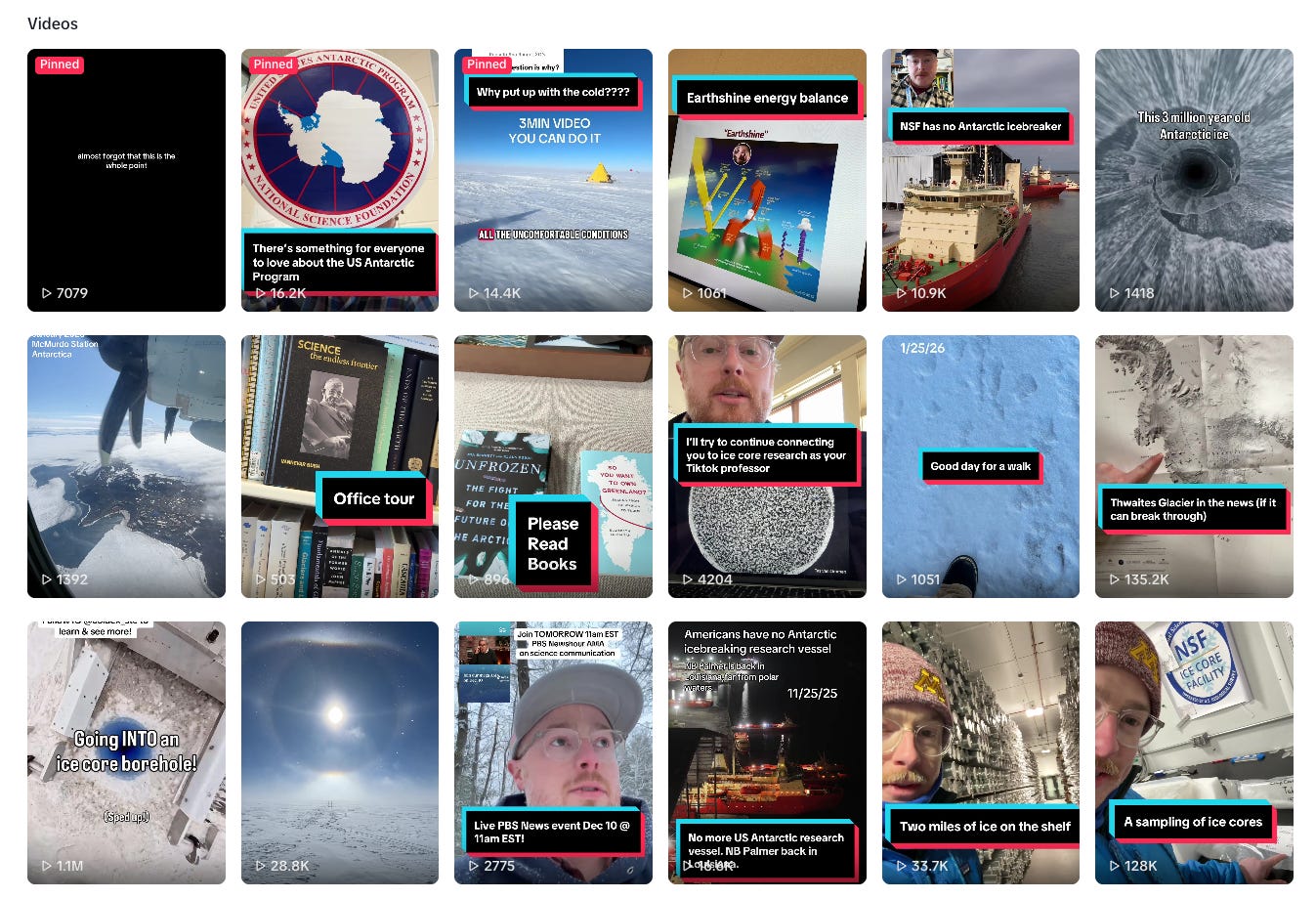
Yeah the social media for me was a happy accident. I posted a video on Twitter way back in 2018 of dropping a chunk of ice in a pure-ice borehole... it makes a crazy sound. It went super viral and sort of initiated my following there, and on Instagram and that led to Tiktok recruiting me as part of a cohort of educators back in April 2020 as they were blowing up and COVID was shutting everything down. I was posting about recent Antarctic fieldwork and it’s so visually captivating it built from there.
I’m not super surprised, to be honest, as we’re lucky to have the exotic “hook” of Antarctic scenes. I’ve since COVID become less unique of a creator, and Antarctic tourism is really expanding (rather dangerously, if you ask me) so more “influencers” are going down there for the draw and the clicks. I of course still only go there when supported by a national Antarctic program, like our world-leading United States Antarctic Program operated by the National Science Foundation with support from many branches of the military through the annual Operation Deep Freeze.
My social media is just me using my smartphone as a portal to our science. I try to act no differently when I’m on camera there (although because I’m often doing the science, I’m not always on camera myself). I don’t consider myself an influencer or content creator. I’m a scientist with a convenient camera, and a platform to share our work. I wish I didn’t feel so much like the only one of my colleagues there doing that type of science communication. It’s really not that scary and there’s so much attention everyone is giving to social media and video based communication that scientists have to be there to make clear how we university scientists do science for the American public using funds from federal agencies like the National Science Foundation.
Our 80 year old funding model, which has placed the United States firmly as a global leader in science, research and development, is massively in question. For other science communicators, please join along and share often, treat each post as an experiment to learn how to best communicate through these gamified social media communication platforms!
Looking at the next 20 years, what's the scenario that worries you most, and what's the one that gives you the most hope? Not the average scenario, the edges.
Next 20 years I really worry that not only will we not transition away from the hydrocarbon based energy system that we know is causing rising temperatures worldwide, but that what we do transition away from is science and evidence-based decision-making.
The late, great Carl Sagan worried about this back in the mid-1990s and his quotes from his final book (The Demon Haunted World: Science as a Candle in the Dark) remain prescient.
"I worry that, especially as the Millennium edges near, pseudoscience and superstition will seem year by year more tempting, the siren song of unreason more sonorous and attractive. Where have we heard it before? Whenever our ethnic or national prejudices are aroused, in times of scarcity, during challenges to self-esteem or nerve, when we agonize about our diminished cosmic place and purpose, or when fanaticism is bubbling up around us—then, habits of thought familiar from ages past reach for the controls. / The candle flame gutters. Its little pool of light trembles. Darkness gathers. The demons begin to stir.”
Carl Sagan (p. 26-27)
What gives me hope is that we're already seeing that decisions made that are based on wishful thinking or to satisfy conflicts of interest aren't exactly succeeding. I am hopeful that we find renewed purpose in centering public service and sustainability in American life.
If a 19-year-old version of you was starting out today, same curiosity, same drive, but entering our current reality, what would you tell them? Why?
As for 19-year-old me, I'd say that the need to understand how Earth works and how we can find our way to a (more) sustainable relationship with Earth resources has never been more urgent. I try to tell this to my undergraduate environmental science, policy and management students.
We don't advise future policymakers and managers to ignore glaring problems that are causing harm and increasing risk. We advise them to understand the problem and bring folks along toward solutions.
Thanks, Peter 🙏
If you learned a thing or two, consider sharing this interview with a friend 🌳